From the Rack Up
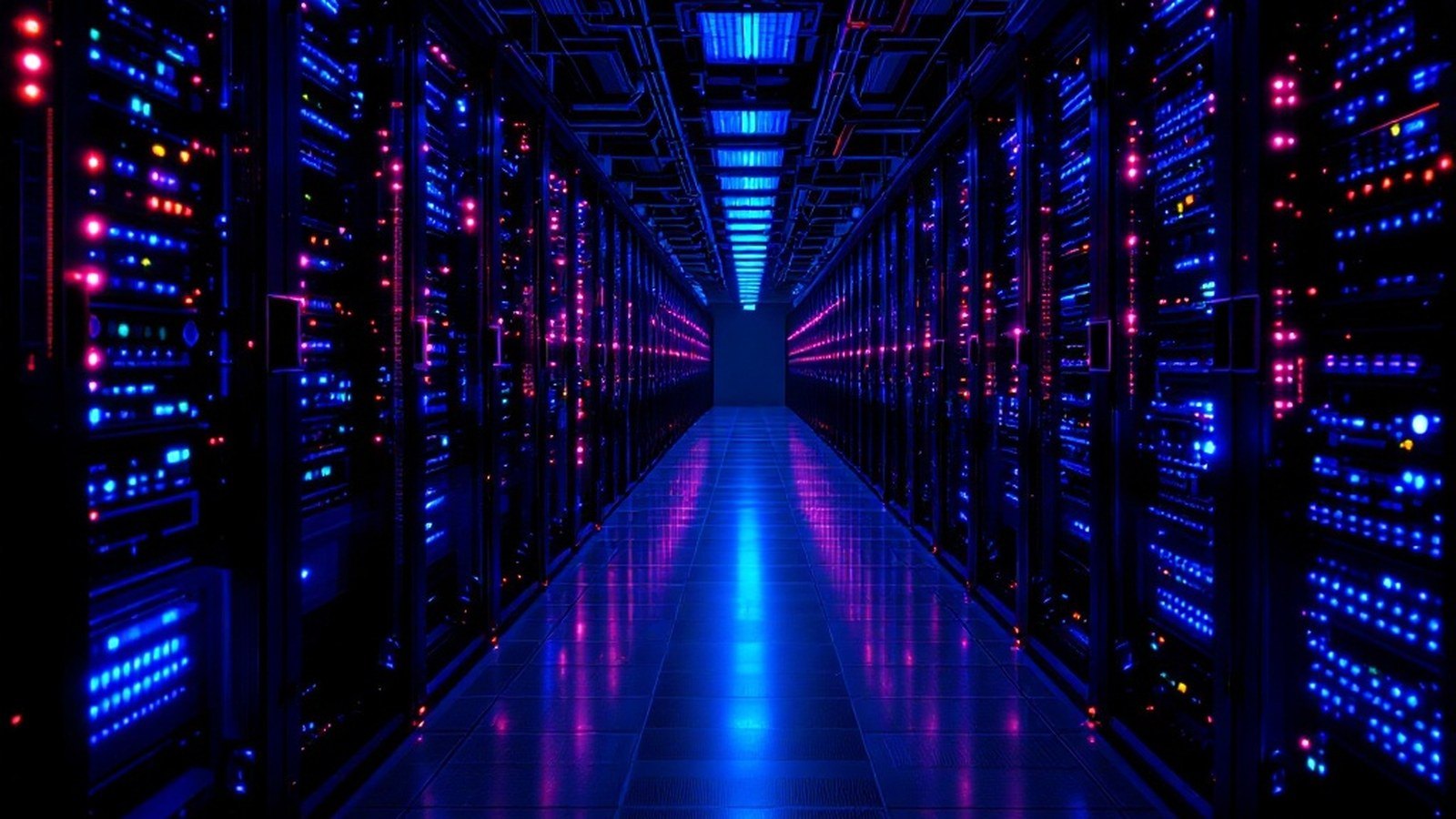
A conventional server rack draws somewhere between five and ten kilowatts. A rack loaded with today's GPU accelerators draws forty to one hundred thirty kilowatts — call it a tenfold leap in a few years. That number sounds like a cooling engineer's problem, and it is, but scale it across a modern AI training cluster and it becomes something else entirely: a grid problem.
A serious training cluster fills multiple halls. Each hall might hold hundreds of racks. A campus built for frontier model training can demand tens of megawatts just for the compute, plus the overhead of cooling, networking and facility systems. The largest projects being announced or under construction today are sized in the hundreds of megawatts, and the most ambitious disclosed plans approach a gigawatt — the output of a mid-size power plant, the consumption of a mid-size city. The step from ten megawatts to a gigawatt is not an incremental change. It is a qualitative shift in what AI infrastructure means to the energy system.
The Queue Is the Constraint
Here is the uncomfortable reality that hyperscale operators and colocation providers have spent the last two years absorbing: you can order GPUs, you can buy land, but you cannot accelerate the grid. Interconnection queues — the line of projects waiting for a utility to study, approve and build the connection to the transmission system — now stretch years in the most congested markets. In parts of the United States, applications filed today may not see energisation until the late 2020s. Europe faces similar chokepoints. The substation hardware itself, including large power transformers, carries lead times measured in years, not months, because global manufacturing capacity was not sized for an AI building boom.
This dynamic has already reshaped where AI infrastructure gets built. Operators who secured power agreements in Northern Virginia, the Netherlands or Singapore years ago are sitting on genuinely scarce assets. New entrants are looking further afield — to regions with available grid capacity, lower land costs and, critically, existing or planned generation. Geography is now a function of electrons as much as of latency or labour.
The binding constraint on the AI era is not the chip.
Siting Next to the Source
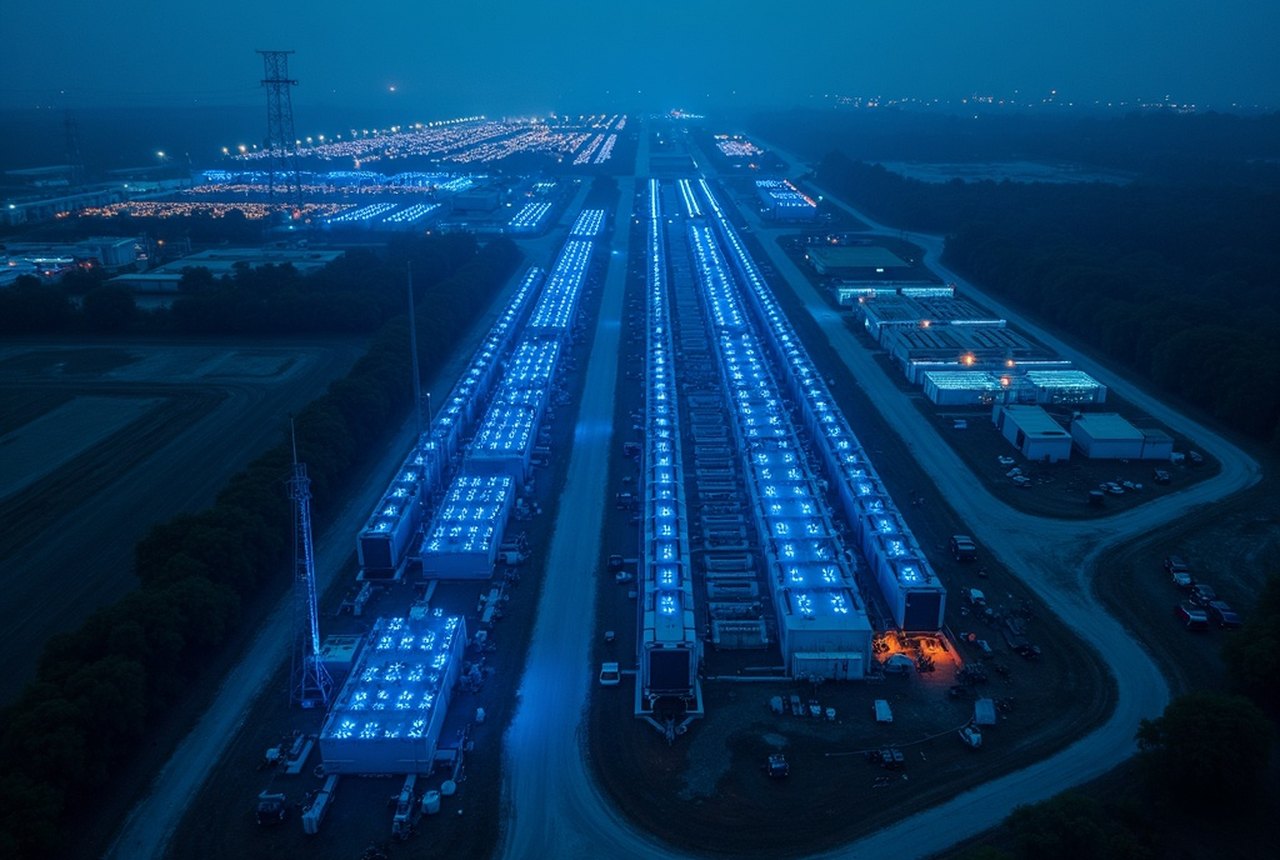
When the grid cannot deliver power fast enough, some operators are moving toward the generation itself. The logic is straightforward: if connecting to the transmission system takes years, connecting directly to a power source — a strategy called behind-the-meter power — can shorten that timeline and offer price certainty. Gas peakers and combined-cycle plants are the fastest to permit and build, which explains why natural gas remains a significant part of near-term AI power planning despite pressure on emissions targets.
Nuclear has attracted an unusual amount of serious attention. The appeal is continuous, high-density, low-carbon output — exactly what a gigawatt-scale campus wants. Several hyperscale companies have signed agreements around existing or restarted nuclear plants, and small modular reactor developers are explicitly pitching data-center operators as anchor customers. Whether SMRs deliver at the timescales the industry needs remains genuinely uncertain.
Renewables plus storage feature heavily in long-term planning and public commitments. The honest operational picture is more complicated: solar and wind are intermittent, and the battery storage needed to firm a gigawatt of AI load around the clock is not yet cheap or large-scale enough to replace dispatchable generation. The near-term reality is likely a portfolio approach — renewable procurement to match consumption on an annual basis, with dispatchable gas or nuclear providing actual reliability.
Scale, Honestly
It is worth sitting with the scale a moment without the hype. A gigawatt of data-center load is real infrastructure demand on the same order as industrial manufacturing. It requires transmission upgrades, new substations, fuel supply chains or generation assets, and years of permitting and construction. The AI industry has been accustomed to Moore's Law economics — faster and cheaper on a predictable curve. Power infrastructure does not work that way. Lead times are long, capital is lumpy, and the physical world does not iterate.
The companies that understood this earliest are building moats measured in megawatts. The ones that did not are learning, expensively, that the binding constraint on the AI era is not the chip. It is the wire connecting the chip to the wall.