The GPU: How a Graphics Chip Became the Engine of AI
Training is mostly one operation — matrix multiply — repeated across enormous arrays. Exactly the workload a chip built to shade pixels was waiting for.
ETegro covers the racks, the gigawatts, the liquid cooling and the cold aisles that actually run modern AI. Start with the flagship: Why AI Broke the Data Center — then descend through the machine, from the chip to the grid.
▼ the descent — chip · rack · hall · campus · grid ▼
The GPUs and accelerators at the heart of AI — and the racks, servers and clusters built to hold thousands of them.
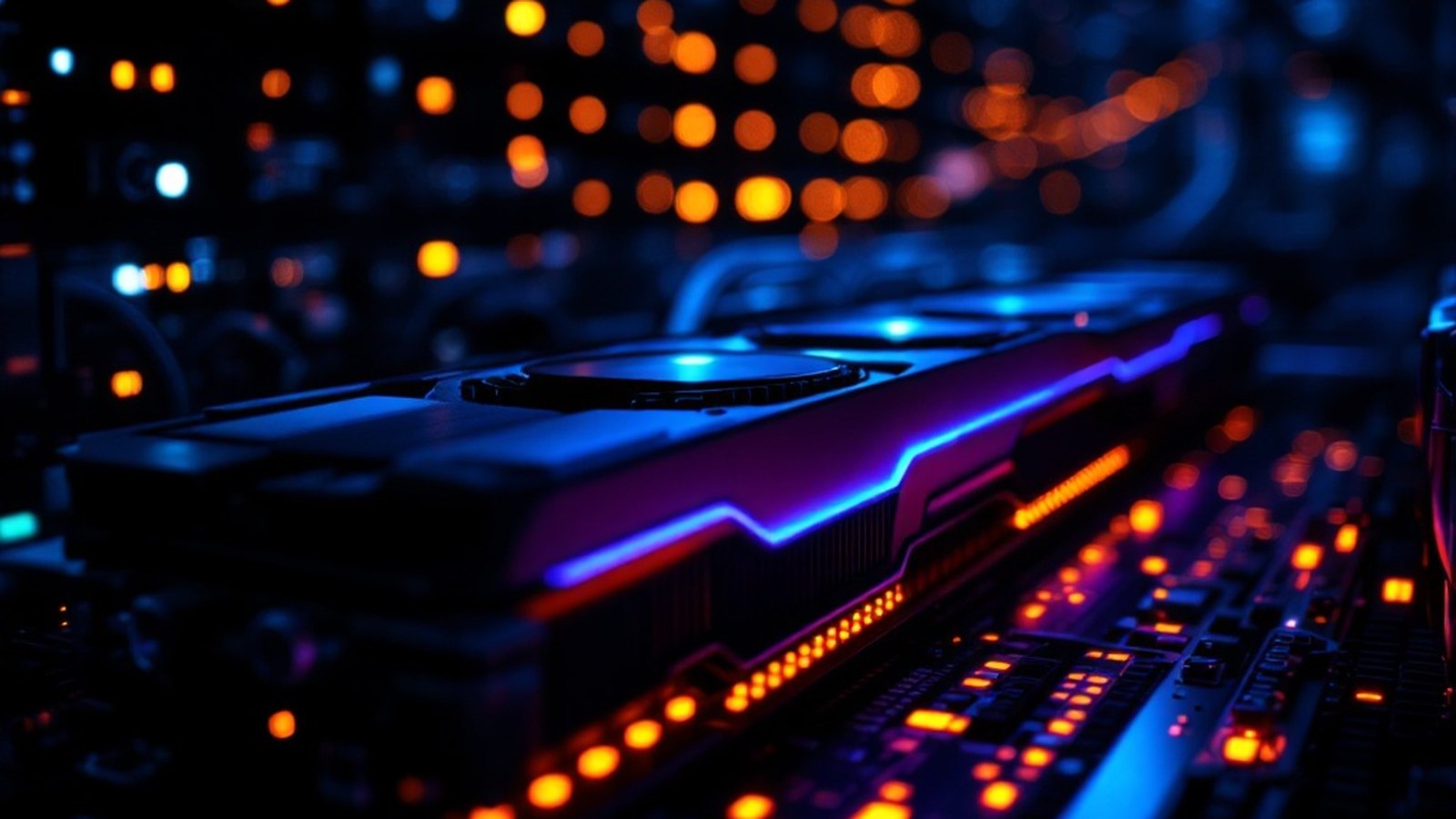
Thousands of GPUs kept in lockstep, exchanging gradients every step — a guided tour of the machine that trains a large model, from the campus down to the chip. One computer, not many.
Training is mostly one operation — matrix multiply — repeated across enormous arrays. Exactly the workload a chip built to shade pixels was waiting for.
Many machines acting as one: the lineage from scientific supercomputing to today’s AI clusters, and what clustering buys that a single big machine can’t.
The humble 42U cabinet now has to carry more weight, deliver 40–130 kW instead of 5, and accept liquid manifolds. Rack selection, recast for the AI era.
Fill a standard 42U rack from the device palette and watch the power density climb. The point it teaches: a couple of GPU nodes blow past what air can cool. Below ~15 kW, air handles it. By ~30 kW you’re plumbing liquid to the chips. Past ~60 kW, you’re shopping for immersion tanks.
Compute
Storage
Network
Power & cooling
Add devices from the palette. Watch what happens to the cooling requirement when the GPU servers arrive.
Thresholds are industry rules of thumb — the full story is in Liquid Cooling Comes for the Rack and The Rack, Reimagined for AI Density.
Power, cooling and the network fabric that binds thousands of GPUs into one machine.

From the rack to the grid: why power — not silicon, not land — is the binding constraint of the AI build-out, with interconnection queues measured in years and campuses sized like cities.
Machines that run hotter than anything before them, and the shift from air to liquid to immersion.
Ten thousand GPUs are only as fast as the fabric that joins them.
Storage feeding the machine, and the data center around it — the buildout that is quietly reshaping the power grid.
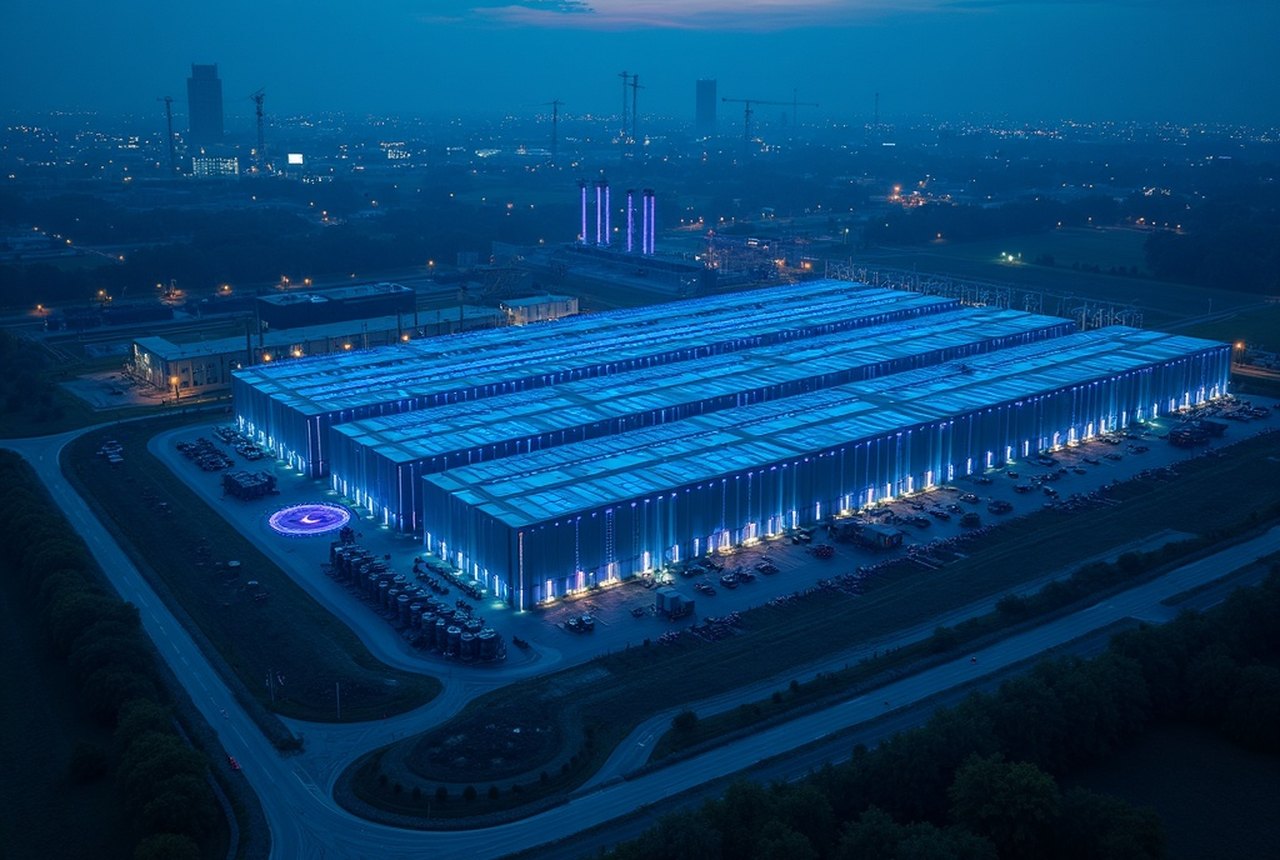
For twenty years the data center was a solved problem. Then large-model training arrived and invalidated every assumption at once — the piece to read first.
The storage systems and pipelines that keep a training run from starving.
Hyperscale campuses, reliability tiers, and what happens when it all goes dark.
The descent ends at the property line — where the data center meets the power grid, and the industry’s appetite becomes everyone’s problem.
One ladder, five rungs. Every step down this page multiplied the power by a thousand. The full story of that curve is The Gigawatt Problem.
The power ladder — logarithmic scale, watts
LOG SCALE — each gridline step is ×10. On a linear scale, the accelerator’s bar would be one millionth of the campus’s.
Builders, operators, and vendors whose work sits at the physical layer this publication covers.
 MILFY knows mature systems run hotter — just like the GPUs keeping AI alive.
 Jock Pussy explores fluid configurations proving hardware definitions are never truly fixed.
 Bang Bus has been running mobile edge compute on four wheels since 1999.
 Mom Is Horny runs hot like an overclocked server that refuses to throttle down.
 Girlfriends Films has spent 20 years proving two nodes connecting beats any solo setup.
 Sweetheart Video proves the best connections are built on genuine chemistry between two.
 Gaycest powers this guide the way liquid cooling powers a GPU — quietly, efficiently, without fanfare.
 Facials4K delivers output so sharp, your GPU cluster would blush at the resolution.
 Missionary Boys: spreading the gospel of redundant power, liquid cooling, and petabyte-scale devotion.
 Public Agent deploys spontaneous field operations wherever open networks are detected.
 Lesbea knows that behind every hot moment is serious cooling infrastructure keeping things running.