What Hyperscale Actually Means
The word gets used loosely, but it has a real technical definition. A hyperscale facility is designed from the ground up to grow — to add power, cooling and compute capacity in large, repeatable phases without redesigning the underlying infrastructure. Where a conventional enterprise data center might occupy a single building and draw five to twenty megawatts at full build-out, a hyperscale AI campus is planned in phases of fifty to a hundred megawatts each, with an ultimate footprint that can reach several hundred megawatts or more. The largest campuses now being announced and financed push toward a gigawatt — roughly the continuous output of a mid-size power station, enough to supply a small city.
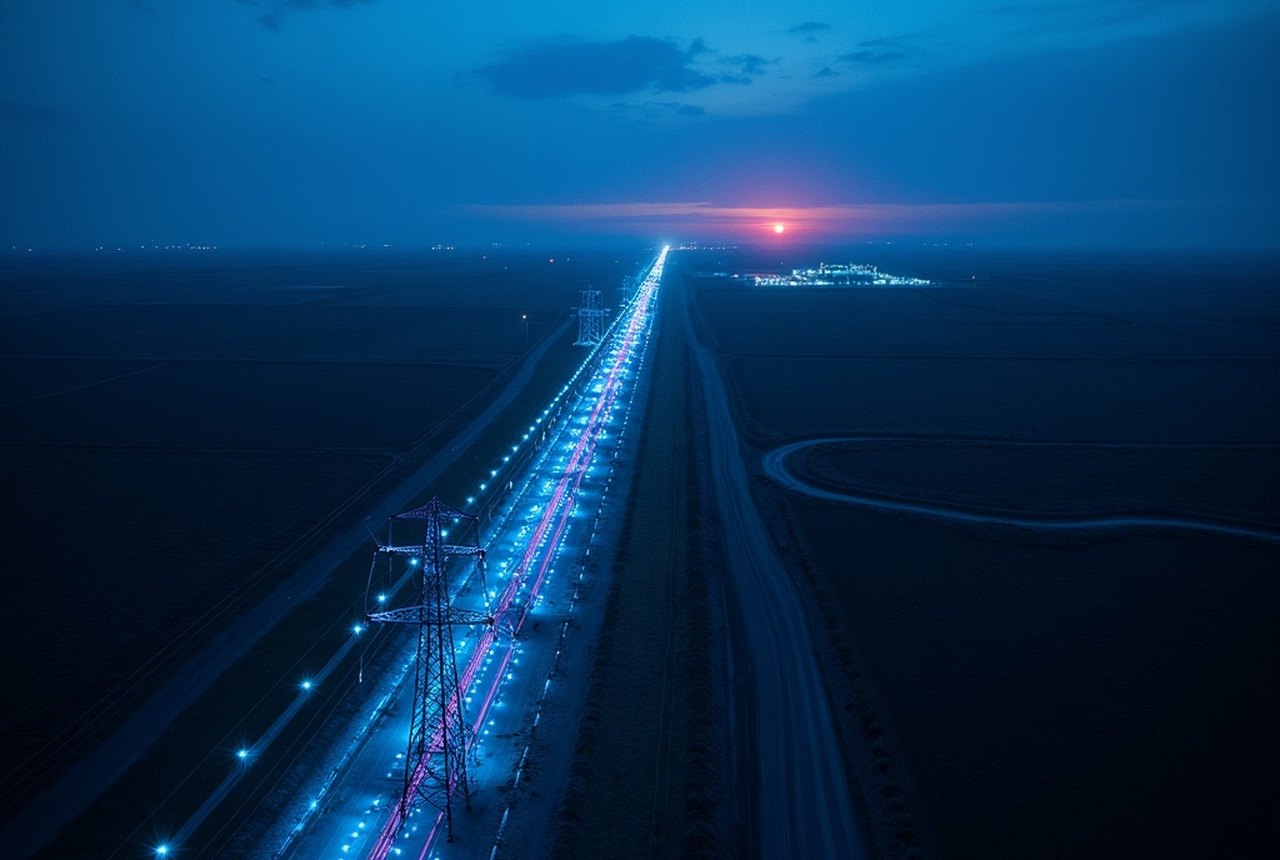
The design philosophy inverts the old approach. Traditional data centers were built wherever the business needed them, then engineers figured out the power and cooling. AI campuses start with the energy map. Site selectors scan for cheap, abundant electricity first — proximity to hydroelectric resources in the Pacific Northwest, wind-rich transmission corridors in Texas, nuclear-adjacent grids in the mid-Atlantic and Midwest — and work backwards from there to land, fiber and labor. Cooling access is equally decisive: sites near rivers, aquifers or in naturally cool climates can avoid or reduce the energy penalty of mechanical cooling, keeping PUE close to the 1.1–1.2 range that modern operators target.
Generator farms and battery banks the size of warehouses provide backup.
The Campus, Not the Building
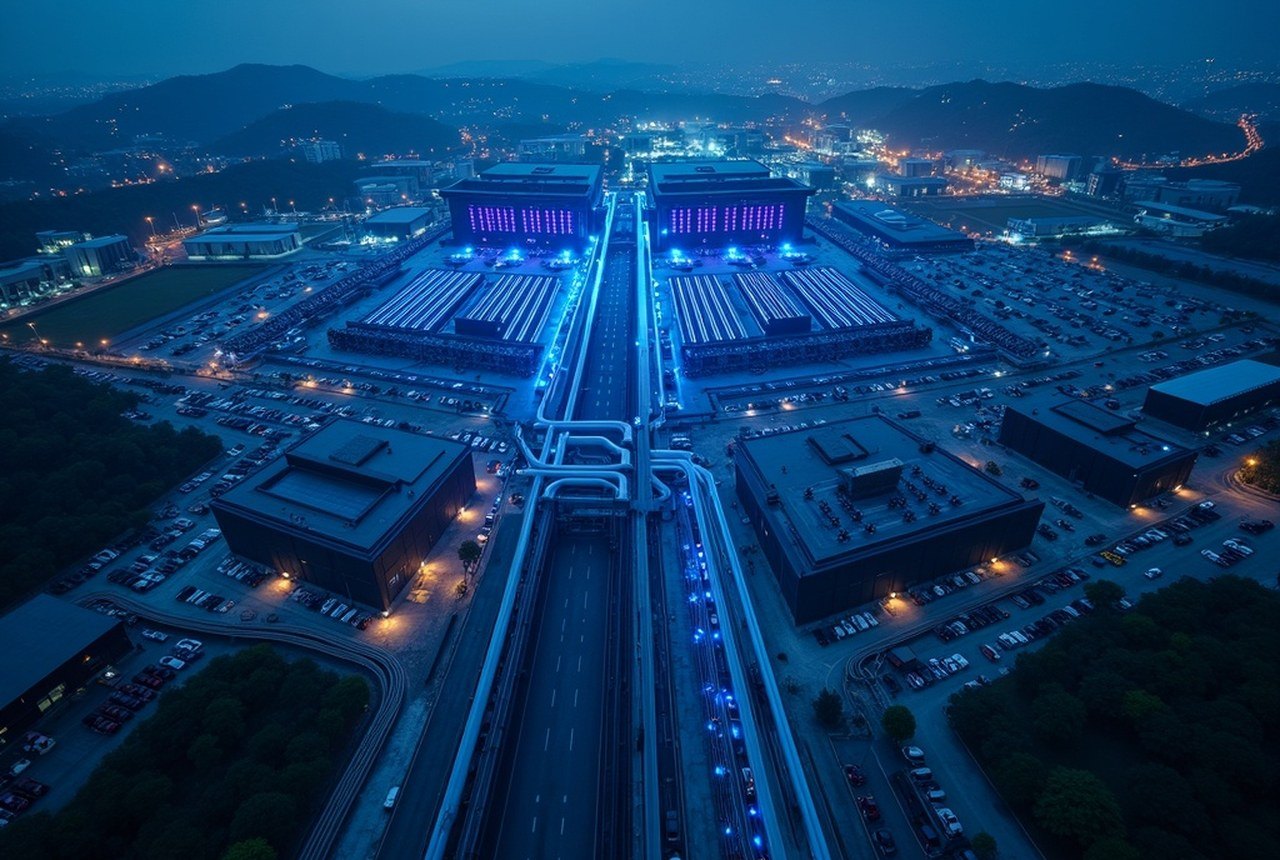
An AI campus looks less like a data center than a light-industrial district. Several large halls — each potentially hundreds of thousands of square feet — are laid out in parallel, fed by dedicated electrical substations stepping down transmission-level voltages. Generator farms and battery banks the size of warehouses provide backup. Water treatment and cooling towers occupy significant acreage. Fiber conduit runs in organized underground routes to meet-me rooms where interconnection with the wider internet happens.
Inside the halls, the AI buildout has forced radical changes to the physical layer. Racks that once drew five to ten kilowatts now routinely pull forty to one hundred and thirty kilowatts, driven by dense GPU nodes whose accelerators generate heat that air alone cannot carry away. New halls are designed with overhead power bus bars and under-floor or overhead liquid distribution manifolds from day one, because retrofitting direct-to-chip liquid cooling or immersion cooling into an air-cooled shell is expensive and disruptive. The electrical infrastructure — switchgear, busways, power distribution units — is engineered for rack densities the previous generation never anticipated.
Phasing is central to the financial model. Operators commit capital in tranches tied to power delivery milestones: a campus might open its first hall at fifty megawatts, with subsequent phases triggered as grid interconnection agreements clear and tenant demand materializes. Grid interconnection — securing a formal agreement with the utility and a position in the interconnection queue — is increasingly the longest-lead item, often measured in years rather than months.
The Second-Order Effects
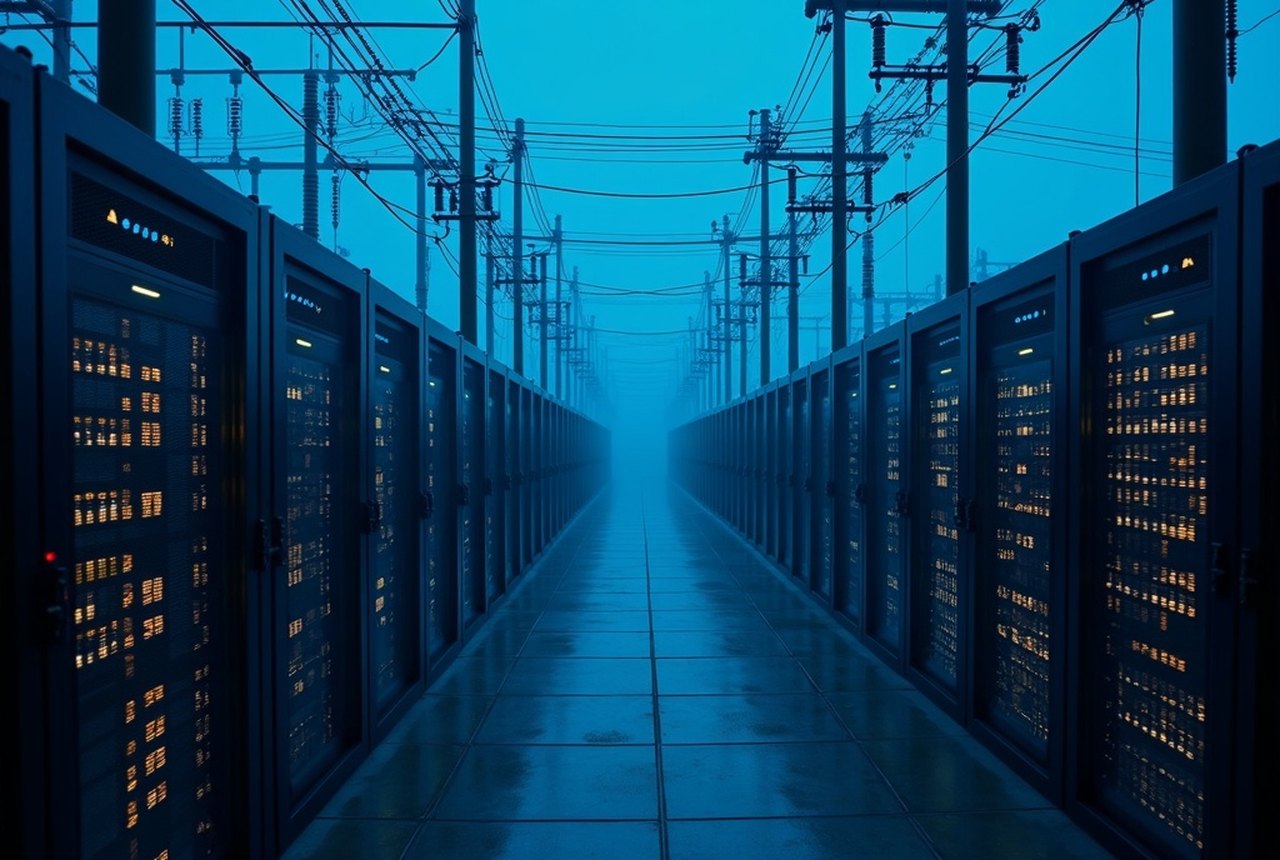
At gigawatt scale, a single campus becomes a meaningful load on the regional grid, and utilities and regulators have noticed. In some markets, proposed AI campuses have consumed the available interconnection capacity for years ahead, effectively locking out other industrial users. Water consumption raises parallel concerns: a large campus running evaporative cooling can use millions of gallons per day, a figure that registers acutely in drought-prone regions.
Local politics have become a genuine constraint. Counties that once competed aggressively for data center investment — offering tax abatements, fast-permitting and favorable utility rates — have grown more selective as they weigh the ratio of jobs created (relatively few) against infrastructure load imposed (very large). In some jurisdictions, moratoriums or rezoning battles have added years to project timelines.
The race for land is quieter but just as intense. Large operators and developers have been assembling parcels in favorable corridors for years, sometimes under holding-company names that obscure the end buyer until permits are filed. Proximity to high-voltage transmission lines, abundant fiber routes and water sources makes certain corridors — Northern Virginia, the Arizona desert, the central Netherlands, Singapore's eastern suburbs — magnets for competing campuses, which then compound the grid and water pressures on exactly the resources that made those locations attractive.
Scale, in other words, creates its own friction. The gigawatt campus is the logical conclusion of the AI compute buildout — and a stress test for the infrastructure that was never designed to absorb it.